




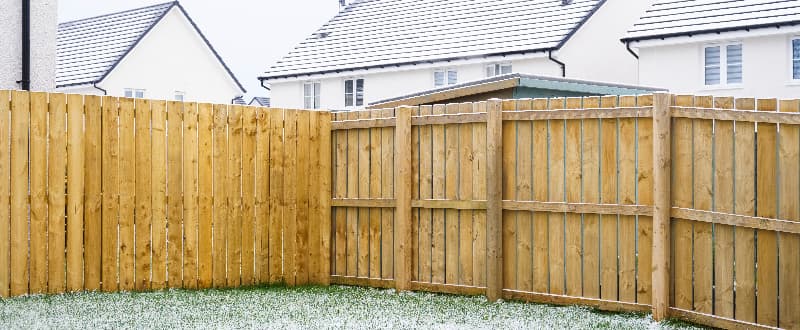
1. Check the condition of your fence
Take a good look at your fence panels. Are any leaning, cracked, or showing signs of rot? Loose posts or damaged boards can quickly get worse when storms hit. If your panels look like they might not make it through the winter, it’s worth getting them replaced sooner rather than later. On the other hand, if everything’s holding up okay, a few minor repairs might see it through until spring. Either way, spotting potential issues now will save you hassle later.
2. Think about the ground and weather
Winter weather in the UK can make installing fence panels trickier. Frozen or waterlogged ground makes digging post holes awkward, and cold, wet conditions can affect fixings. If your fence is in bad shape, you might not have the luxury to wait. But if it’s still stable, holding off until late winter or early spring, when the ground’s easier to work with, can save you a lot of effort. Keep an eye on the forecast and pick a dry spell if possible – it makes life a lot easier.
3. Security and garden protection
Your garden fence panels aren’t just for show. They keep your garden secure, protect plants, and maintain privacy. Leaving a weak fence through winter could put your garden at risk – gusty winds, wandering animals, or even small branches can cause damage. Replacing panels now helps your garden stay safe, keeps everything neat, and avoids any nasty surprises when the storms come.
4. Plan your installation
If you’re thinking of doing it yourself, planning is key. Make sure you have the right panels, posts, screws, and tools ready, and think about whether you’ll need a hand from a mate. Early autumn is often the best time – longer days, milder weather, and less chance of frost make installation much smoother. Getting everything organised now also avoids the rush in spring when everyone else decides it’s fencing season.
5. Keep your garden looking cared-for
Even if you’re not spending much time outdoors in winter, a tidy garden just feels better. Replacing worn panels can freshen up your space, stop gaps letting in drafts, and make it easier to look after borders, paths, or decking. Waiting until spring might be more comfortable weather-wise, but any damage over winter could make the garden feel neglected. A bit of attention now keeps everything neat and manageable.
Making the decision
Ultimately, whether to replace your garden fence panels before or after winter depends on their condition, your priorities, and the weather. Panels in poor shape usually benefit from early replacement, while those in good condition can wait a few months. Either way, planning ahead, using quality panels, and giving a little thought to timing makes life a lot easier and keeps your garden safe and looking its best.
If you want a quick estimate without the guesswork, our fence calculator is a good place to start.
At Welch Fencing, we’ve got the garden fence panels, advice, and know-how to help you get the job done, whether you’re replacing one section or the whole lot. Made in the UK and delivered reliably, our products let you focus on enjoying your garden instead of worrying about dodgy fences.
Need guidance on the right panels or installation? Give our friendly team a call on 01772 336 476 or drop us an email at [email protected] – we’ll make sure your garden’s safe, secure, and looking great all year.