



1. Tighten up loose hinges and fixings
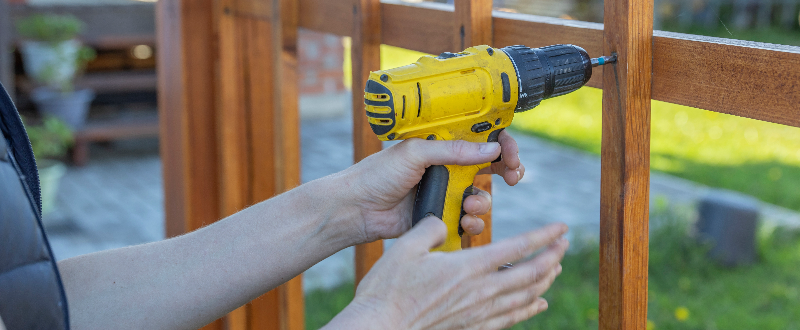
Loose or rusting fixings are one of the most common causes of unstable garden fencing. Over time, screws, bolts, brackets and hinges can work themselves loose, especially after exposure to strong winds, heavy rain and repeated freeze-thaw cycles. Gates often show the problem first, becoming wobbly, misaligned or difficult to open and close.
Taking a short amount of time to check and tighten all fixings can make a surprisingly big difference. Replacing worn or rusty screws with galvanised or stainless steel screws helps protect your garden fence panels from unnecessary movement and strain. This simple maintenance job improves the strength of your fencing straight away and helps prevent small issues from developing into bigger structural problems.
2. Stabilise wobbly fence posts early
Fence posts are the backbone of your garden fencing, so if they start to move, it’s important to act quickly. Winter weather often exposes weaknesses in post foundations, as waterlogged soil and frost can cause posts to loosen or lean.
If your fence post is wobbling, try adding soil or gravel around the bottom to make it stable again. In winter, you can use expanding fence-post foam, which sets quickly and works in less-than-perfect weather. Taking the time to secure your posts now will help keep your garden fence straight and strong, preventing any bending or misalignment until spring.
3. Re-secure sagging fence rails
Sagging rails can make otherwise sound garden fencing look tired and uneven. This usually happens gradually, as fixings loosen or the weight of garden fence panels puts extra pressure on rails over time.
Re-securing rails with sturdy brackets or rail ties is a simple but effective fix that restores strength and improves the overall appearance of your fence line. Adding a discreet centre support to longer runs can also help distribute weight more evenly, reducing future strain. These small adjustments are what will significantly extend the lifespan of your garden fencing.
4. Repair small areas of rot before they spread
Localised rot doesn’t always mean your garden fence panels need replacing straight away. If caught early, small areas of rot, particularly around the base of posts or rails, can often be repaired and reinforced.
Start by removing any soft or crumbling wood, then apply a wood hardener to strengthen the remaining material. Filling the area with an exterior-grade wood filler or epoxy creates a sealed, durable surface that helps prevent further moisture damage. Tackling rot during winter is a smart preventative step that protects your garden fencing and delays the need for more extensive repairs.
5. Fix sagging or dragging gates
A gate that drops or drags along the ground can quickly become annoying. It’s harder to open and close, and it can also put extra strain on the surrounding garden fencing. Over time, that added pressure can loosen fence posts, wear out hinges, and even affect the garden fence panels next to the gate.
Thankfully, it’s usually an easy fix. Fitting an anti-sag cable kit is a simple and affordable way to lift the gate back into position and take the weight off the fence post. You can also adjust the hinges or add a small gate wheel to help support the gate. You want to address these issues early to keep your garden fencing neat, working properly, and standing strong through wet and windy winter weather.
Taking care of your garden fencing is all about the little things. Whether you’re looking to do some quick winter fixes or you’re thinking about upgrading your concrete fence posts or garden fence panels, we’ve got everything you need to get the job done right. Plus, all our products are made right here in the UK, and we pride ourselves on fast, reliable delivery, so your materials will arrive just when you need them!
If you’re curious how much fencing you’ll actually need, our fence calculator can give you a quick answer.
If you’d like advice or help choosing the right products for your garden fencing project, our friendly team is always happy to help. Just give us a call on 01772 336 476 or email [email protected] for expert support!