




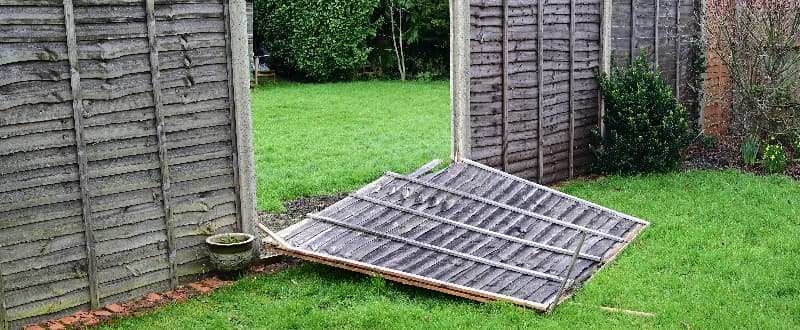
1. Make sure everything is safe before you start
After a storm, it’s tempting to head straight outside and start putting things back how they were, but it’s worth slowing down and checking for potential hazards first. Storm damage isn’t always obvious at a glance, and loose garden fence panels, exposed nails or screws, and fallen branches can easily cause injuries if you’re not careful. This is especially true in winter, when icy patches and waterlogged ground make everything more slippery and unstable underfoot.
Pay close attention to panels that are partially detached or hanging at an angle. These can shift suddenly if there’s another gust of wind or if pressure is put on them while you’re working nearby. If anything looks unsafe, it’s best to keep people and pets well away until the area is secured. In some cases, removing a badly damaged panel straight away is safer than leaving it in place, as a falling panel can damage neighbouring fencing, sheds, greenhouses or even parked cars if the weather turns again.
2. Take a proper look at the damage
Once it’s safe to do so, take the time to walk the full length of your fence line and really look at what’s going on. Storm damage isn’t always as obvious as a panel lying flat on the ground. In many cases, garden fence panels are still upright, but the fixings have loosened, rails have pulled away from posts, or posts themselves have shifted slightly in waterlogged soil.
Pay particular attention to areas where the ground stays wet for longer, as this is often where posts start to lean after heavy rain. Panels may also look fine from a distance but show signs of cracking, splitting or bowing when viewed up close. Taking photos as you go helps you spot patterns in the damage and gives you a clearer idea of whether you’re dealing with isolated issues or a wider structural problem. This is especially useful if the fence is shared with a neighbour or if you’re planning to get quotes for repair or replacement work.
3. Secure loose garden fence panels to prevent further issues
Winter isn’t always the best time for full fencing projects, but it’s certainly doable. Plus, leaving damaged sections completely untouched can make matters worse. Loose garden fence panels are far more likely to fail if we get another spell of strong winds, which is never unlikely at this time of year. Even a simple temporary fix can make a big difference.
Re-securing garden fence panels with additional screws or brackets helps reduce movement and takes strain off neighbouring panels and posts. Leaning sections can often be braced with temporary supports or stakes to keep everything upright until conditions improve. If your concrete fence posts have loosened in saturated ground, firming the soil or adding gravel around the base can help stabilise them. These small jobs don’t need to be perfect; they’re about buying time and preventing further damage while winter weather continues.
4. Replace panels that won’t recover
Not all storm-damaged garden fence panels are worth saving. Panels that are badly split, cracked through the timber, or warped after prolonged exposure to wind and rain rarely regain their strength, even if they’re screwed back into place. In damp winter conditions, weakened panels tend to deteriorate quickly, especially once moisture gets into the damaged areas.
Replacing panels that are clearly beyond repair helps restore the overall strength of the fence line and prevents extra pressure from being placed on surrounding posts and panels. Leaving a failed panel in place often leads to a knock-on effect, where neighbouring sections start to loosen or lean. In most cases, replacing a few damaged garden fence panels now is far more cost-effective than dealing with a full fence replacement later in the year.
5. Strengthen your fencing to cope better next time
Storm damage has a habit of highlighting weak points in fencing, particularly in older installations. Once repairs are complete, it’s worth thinking about how your fence coped and where it struggled. Timber posts at ground level, low-quality fixings and panels sitting directly on damp soil are common problem areas that tend to fail first during extreme weather.
Upgrading to concrete fence posts or adding gravel boards can significantly improve long-term durability and help protect garden fence panels from ground moisture. Making sure panels are securely fixed, without being completely rigid, also allows a bit of movement during high winds, reducing the risk of panels cracking or posts snapping. These small improvements can make a noticeable difference when the next bout of bad weather rolls in.
Winter weather tends to expose the difference between well-made garden fence panels and weaker alternatives. At Welch Fencing, our panels are built from pressure-treated timber with sturdy framing, hold their shape better and are less prone to rot or movement during wet, windy spells.
Whether you’re replacing storm-damaged sections or upgrading tired fencing, investing in durable, reliable fence panels now helps keep your garden secure, tidy and looking its best long after the worst of the weather has passed.
Not sure where to start? Our fence calculator makes planning your fence nice and simple.
If you need replacement garden fence panels, concrete posts or fencing accessories, we’ve got everything you need, all made here in the UK and available with fast, reliable delivery. And if you’re unsure what will work best for your garden, our friendly team is always happy to help. Just give us a call on 01772 336 476 or email [email protected].
